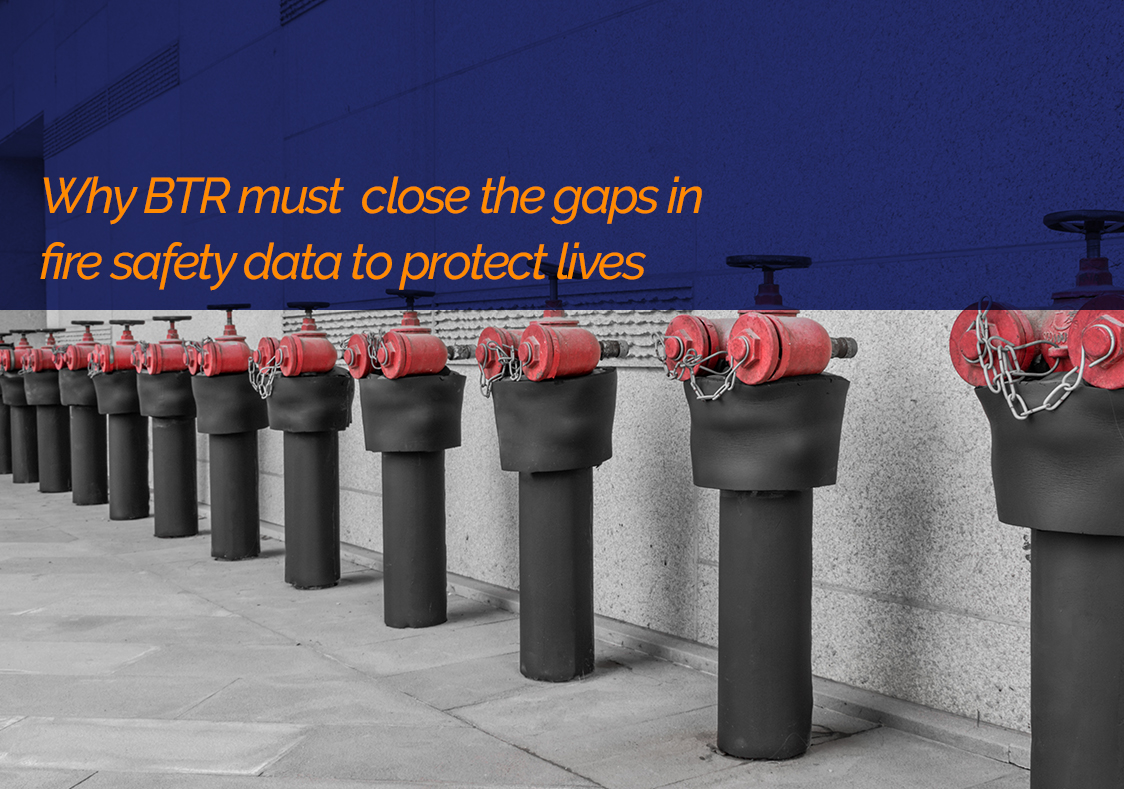
Why BTR must close the gaps in fire safety data to protect lives
For decades, fire compliance has been managed through paper logs, spreadsheets, and tick-box forms, providing comfort rather than certainty. Today, that approach is no longer sufficient. In all sectors covered by the Building Safety Act, there is now a focus on proving every alarm, test, and inspection has actually taken place and is recorded on a digital platform. When data is missing or unreliable, the true level of fire risk remains invisible, and until it’s exposed by a crisis, no one knows the depth of the problem.
Hidden dangers of manual and incomplete records
The Grenfell Tower tragedy is a stark reminder of the consequences when oversight, record keeping, and accountability fall short. Despite this, many buildings still rely on outdated systems that leave critical blind spots in safety data.
For investors in BTR assets, the shift towards digital compliance is material as well as regulatory. Safety data now underpins asset valuation, operational resilience, and long-term income stability. Buildings that cannot demonstrate robust, real-time safety assurance are exposed to heightened scrutiny and reduced investor confidence.
Issues with manual records include:
- Fragmentation: Information stored in spreadsheets, PDFs, or paper logs across multiple sites makes it difficult to form a complete picture of compliance.
- Manual errors and omissions: Reliance on human input increases the risk of missed inspections or incorrect data entry.
- Delayed detection of faults: Data analysis revealed that 443 fires were logged in tall buildings in one year where smoke alarms failed to sound. Among others, problems included missing batteries in smoke alarms and incorrect installations. Without centralised or real-time data, recurring issues go unnoticed until they escalate into hazards.
- Lack of accountability: When maintenance and inspections are outsourced, responsibility can become blurred, and operators have little assurance that scheduled tasks were completed.
- Operational disruption: Data shows in one year there were over 22,000 emergency callouts for false fire alarms in tall buildings. Gaps in record keeping can lead to repeated false alarms, unnecessary call-outs, and inefficient use of resources, creating both safety and financial consequences.
Regulation: The Building Safety Act and the Golden Thread
The Building Safety Act 2022 introduced a new era of accountability across the built environment. Central to this is the requirement for a digital ‘Golden Thread’ of information, a complete, continuously updated record of a building’s design, construction, and maintenance.
For BTR operators, this means maintaining verifiable evidence of every inspection, test, and corrective action undertaken. Lenders, insurers, and investors are increasingly demanding the same clarity, recognising that missing or inconsistent safety data represents not only compliance risk but financial and reputational exposure.
From data gaps to digital proof: how the solution is transformational
A modern compliance technology framework goes beyond digital storage to provide digital proof that safety actions have been completed.
Key features include:
- Automated task scheduling: All inspections, tests, and maintenance activities are planned, assigned, and tracked centrally, ensuring complete coverage and eliminating missed tasks across multiple buildings.
- Real-time verification: Each completed action is automatically time-stamped and linked to the responsible engineer or contractor, providing indisputable proof that the task took place.
- Evidence capture and audit trail: Every system activation, test, and inspection generates a digital record, including timestamps, user IDs, and system data, creating a continuous, tamper-proof audit trail across all sites.
- Centralised visibility: A single dashboard gives facilities teams, managers, and auditors live insight into compliance status, outstanding actions, and potential risks across an entire portfolio.
Operational and financial implications
When service providers are paid repeatedly to address the same issue, costs escalate quickly. A single unresolved repair costing £1,000 can become a £10,000 problem through repeat visits and poor documentation. For large BTR portfolios, often owned by institutional investors or pension funds, a lack of transparency can undermine operational efficiency and investor confidence.
How technology transforms fire safety compliance
By turning to technology, BTR operators can:
- Reduce false alarms and associated disruptions.
- Identify recurring faults more quickly and resolve them at source.
- Provide real-time visibility for facilities teams, senior management, and regulators.
- Demonstrate compliance to insurers and investors through a transparent audit trail.
These are all crucial for BTR schemes promoting hospitality-style management.
The future: predictive and proactive compliance
Advanced analytics and AI enable proactive safety management. By analysing operational data, systems can detect patterns, forecast potential failures, and recommend corrective actions before problems occur.
Compliance must evolve from a reactive, tick-box exercise into a continuous, evidence-based process that actively protects people, property, and organisational accountability. Digital systems that capture test results in real time, automate reporting, and guide operators through UK regulatory requirements provide greater transparency, reduce risk, and instil confidence that compliance obligations are being met.

David Simpson
Group Product Director
Drax Technology