
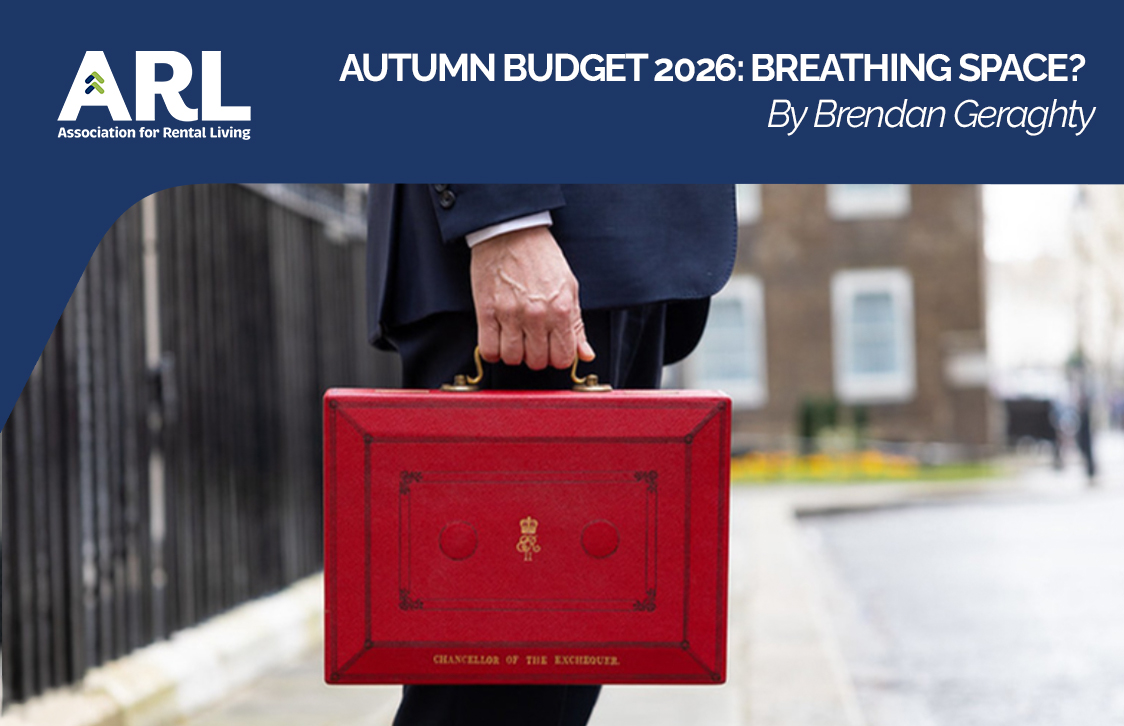
Autumn Budget 2026: Breathing space? Pausing further regulation won’t repair the damage of cumulative regulation on housing delivery
By Brendan Geraghty, chief executive of the Association for Rental Living, the UK trade body for the Build to Rent and rental living sector
The Budget was more about what was not addressed than what was. I was tuned in, awaiting news of the promised ‘breathing space for business’ but alas, by the time the Chancellor sat down, the absence of any tangible measures to address the viability emergency affecting housebuilding across the UK was very much felt.
The housing sector, including Build to Rent, is being held back by cumulative regulation. It’s been building since the 90s as successive policymakers, of all colours, have battled to accelerate delivery, upgrade environmental efficiency and tighten safety standards. All well-meaning of course but together they have created a cake of so many layers, it’s become too rich to eat.
Viability is the test that every housing policy must pass and if a development cannot be funded and built, it delivers no homes, affordable or otherwise.
Whilst the Budget’s measures to include no major changes to building regulations for the remainder of this Parliament (aside from building safety, and rightly so) was welcome, pausing further regulation will not repair the cumulative damage.
We need a more radical reset of the taxes, charges and overlapping regulatory requirements that make new homes unviable.
The OBR itself, in its economic and fiscal outlook, suggests that housing supply in the near term will remain substantially weaker compared with previous forecasts, with this weaker profile partly reflecting the cumulative effects of regulatory and fiscal changes over the last decade.
It states explicitly that policy developments including the Building Safety Levy, Building Safety Regulator regime, Biodiversity Net Gain, the residential property developer tax and higher corporation tax rates, have, when taken together, affected housebuilding activity to a greater extent than previously assumed.
And this is what our members – who represent more than 80% of today’s operational Build to Rent homes in the UK – are experiencing on the ground. Build to Rent completions have slowed, not due to a change in investor appetite, quite the contrary, a wall of development capital is there, waiting to be deployed but layered policy demands have eroded viability.
The absence of a pragmatic approach to selective licensing for Build to Rent homes has, for example, directly led to a reduction in the number of affordable homes delivered and the incoming PRS Database and c. £10 million per annum we have calculated the compliance cost to operational Build to Rent today to be in fees alone, is just the latest layer of regulation for the sector to navigate – and there’s more coming down the track as the Renters’ Rights Act is fully implemented and Future Homes and Buildings Standards comes into force.
If we are to have ‘real hope for tomorrow’ then we must take action today. The Government must move beyond preventing additional costs to actively reducing the burdens holding back delivery.
My hope, on behalf of the rental living sector, is that the Government commits to its Budget promise to (re)establish a Better Regulation Executive, and consider how to amend regulations to support development and ensure that regulation is more proportionate, in order to enable the sustained delivery of the high quality, additional rental homes this country wants and needs.